 | Updated:
As the 2025/26 football season in Europe moves into its decisive weeks, every extra point can shape the race for the title, the fight for European qualification, or the struggle to avoid relegation. That is what makes points earned from losing positions so telling. Some teams fade once they fall behind, while others show the resilience and character to recover from a deficit and change the direction of a match.
This week, Sportingpedia examined the teams across Europe’s top 7 leagues that have earned the most points after trailing at some stage of a game in the 2025/26 season. The report looks at the issue from three angles: the pure total of points won from losing positions, the average return from matches in which a team has faced a deficit, and the sides that have spent the fewest matches trailing in the first place.
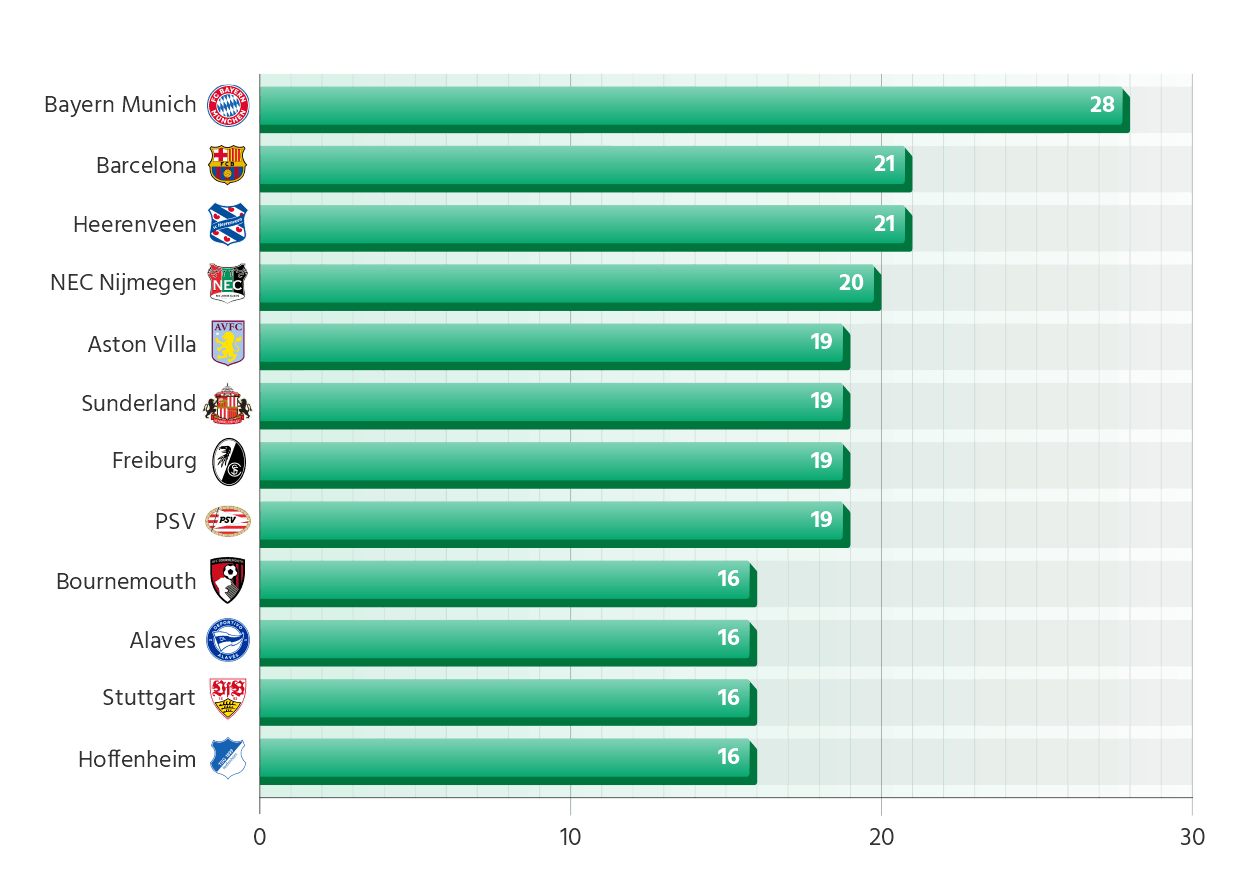
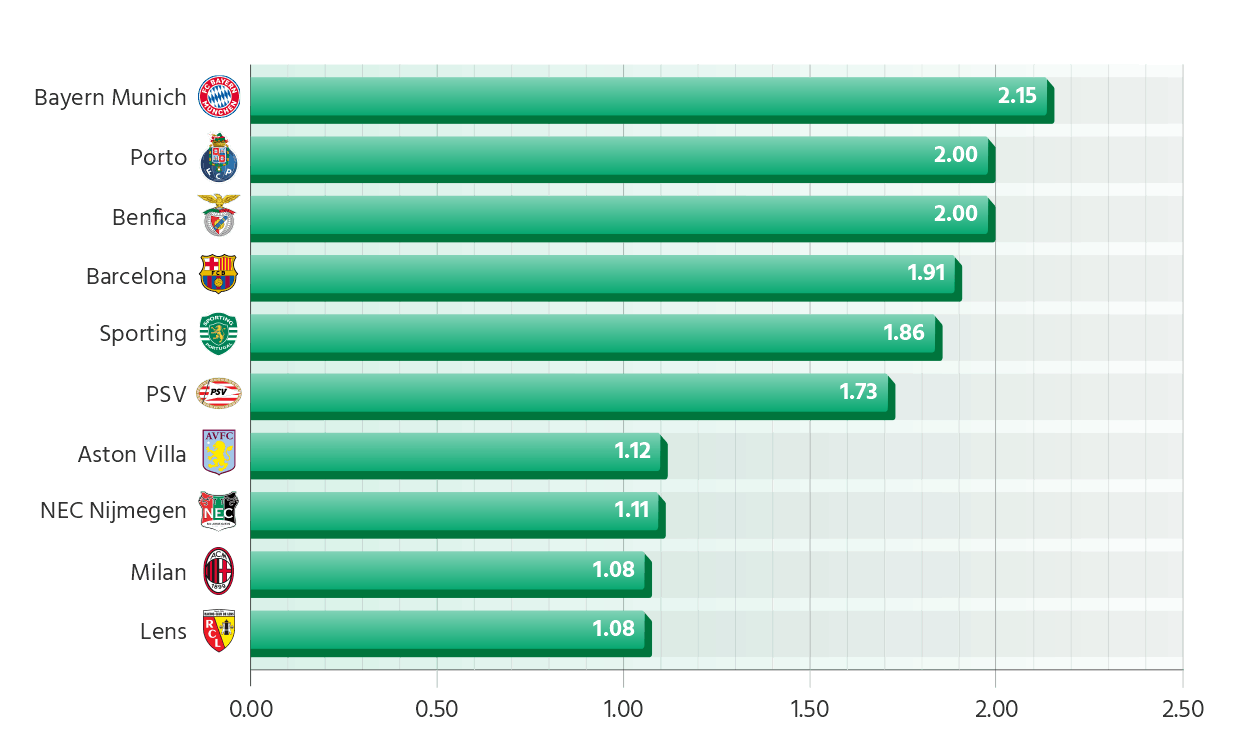
Bayern Munich stand out most by pure volume, having already rescued 28 points from losing positions, seven more than both Barcelona and Heerenveen. They also lead the efficiency table at 2.15 points per match when trailing, ahead of Porto and Benfica on 2.00.
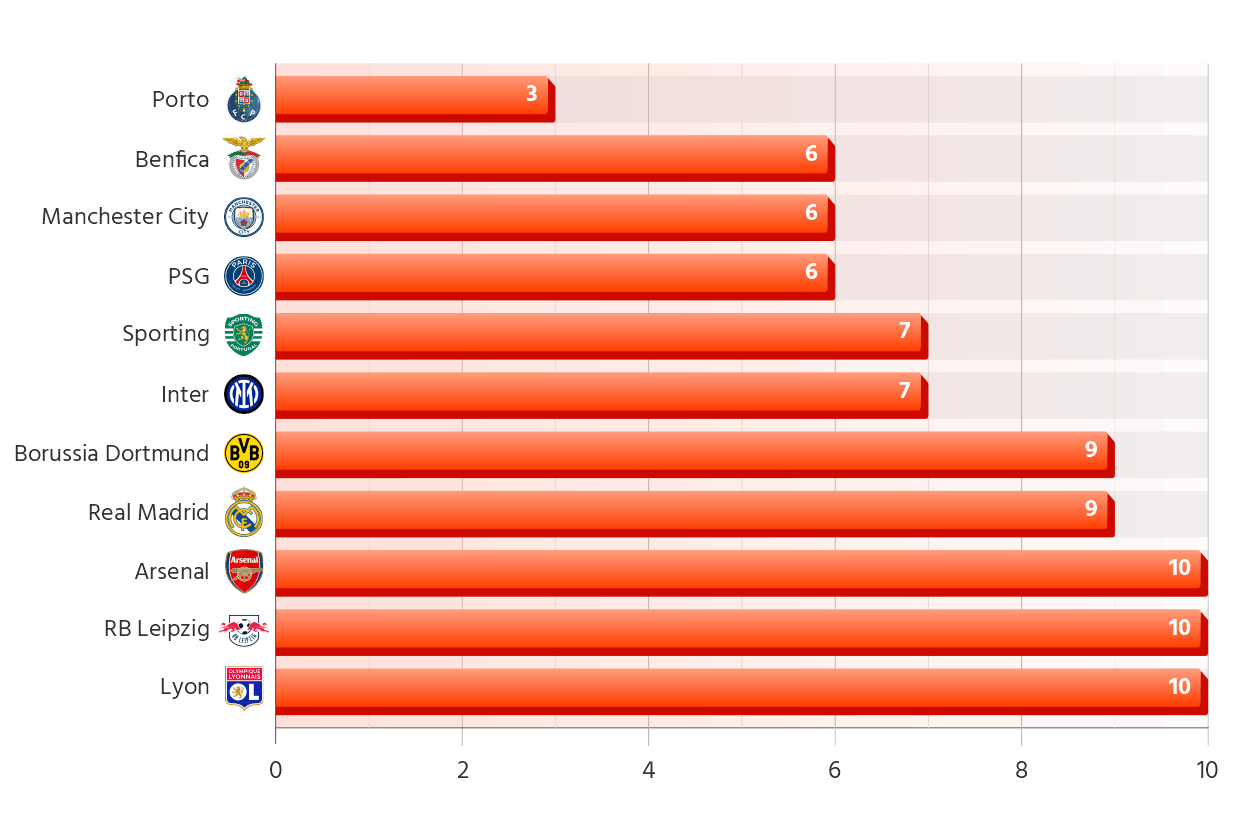
Another curious revelation is that Benfica have fallen behind only six times in league matches this season and have still managed to avoid defeat on every occasion, turning those setbacks into 12 points. Meanwhile, Champions League holders PSG have also trailed only six times, yet have failed to win any of those matches. Porto also stand out as the team to have fallen behind less than anyone else across the leagues in question, doing so in only three league matches this season.
Teams in Europe Top 7 Leagues
with the Most Points Won from Losing Positions in 2025/26
Data Source: Transfermarkt
No team in the report has taken more from adversity than Bayern Munich. The German champions have earned 28 points from losing positions, putting them seven clear of both Barcelona and Heerenveen, who sit on 21. NEC Nijmegen are next on 20, while Aston Villa, Sunderland, Freiburg and PSV all stand on 19.
That makes Bayern the clearest example of a side that can absorb a setback and still take control of a match. Their total is not just the highest in the ranking. It is also comfortably clear of every other team in Europe’s top 7 leagues.
The rest of the top 10 shows how spread out this type of resilience is across the continent. Spain, Germany, the Netherlands and England are all represented near the top, with Bournemouth and Alaves completing the leading group on 16 points each. It is not one league or one style of football dominating this table. It is a broader measure of teams that refuse to let a losing position define the final result.
Teams in Europe Top 7 Leagues
with the Highest Average Points Earned from Matches in Losing Positions in 2025/26
Data Source: Transfermarkt
The second chart gives the raw totals more context by asking a different question: when a team does fall behind, how much does it usually recover? Bayern still lead here, averaging 2.15 points from the 13 matches in which they have trailed. That means they have not only come back often, but have done so at a rate that usually turns a deficit into something close to a win.
Porto and Benfica are next, both averaging 2.00 points per match when trailing. Porto have taken six points from the three matches in which they have gone behind, while Benfica have earned 12 from six. La Liga leaders Barcelona come next on 1.91, followed by another Portuguese side in Sporting on 1.86 and PSV on 1.73.
This is where the difference between total resilience and efficient resilience becomes clear. Aston Villa and NEC Nijmegen both rank 6th and 7th respectively in raw points won from losing positions, but their averages stand at 1.12 and 1.11 because they have had to fight back from deficits much more often. Porto and Benfica, by contrast, combine strong recovery numbers with very few losing situations overall.
Teams in Europe Top 7 Leagues
with the Lowest Number of Matches in Losing Positions in 2025/26
Data Source: Transfermarkt
The third chart shifts the spotlight from reaction to prevention. That matters because the strongest teams do not always reveal themselves through repeated comebacks. Just as telling is how rarely they fall behind in the first place. Porto are the clearest example of that balance, having trailed in only three league matches all season, fewer than any other side across the leagues in question, while still averaging 2.00 points from those setbacks.
Benfica, Manchester City and PSG offer an even sharper contrast because all three have gone behind only six times, yet their outcomes are completely different. Benfica have fought back on every occasion and remain not only unbeaten from those six matches, but the only undefeated team across the leagues in question overall. Manchester City, by contrast, have managed just one win from their six matches after trailing and lost the other five. PSG have done even worse, salvaging only one draw and suffering five defeats. So while the comeback table measures resilience, the deficit table also reveals which teams combine control with the ability to rescue themselves once that control slips.