Key Takeaways:
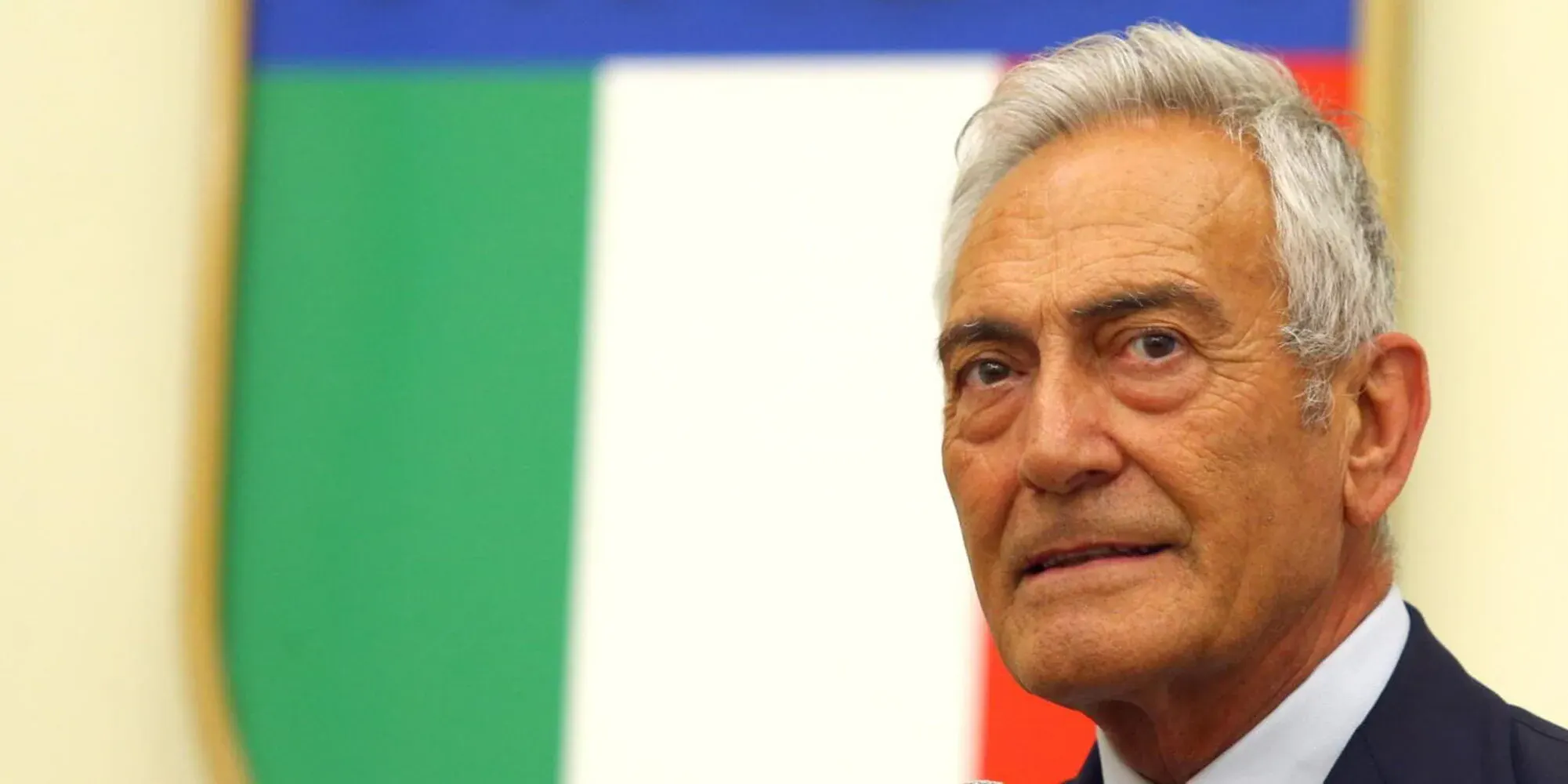
- Gabriele Gravina published a detailed report analysing the current crisis in Italian football and suggesting targeted reforms, despite his resignation as FIGC President last week
- Gravina’s document highlighted structural issues such as poor youth investment, low national team-eligible U21 playing time at just 1.9%, and the challenges of implementing Italian player quotas due to EU free movement rules
- His proposals included directing a portion of betting revenue to football development, reinstating the Growth Decree to attract foreign professionals, lifting the advertising ban on betting sponsors, and urgent reforms across league structures and refereeing
Report Focuses on Serie A Challenges and Structural Shortcomings
Last week, Gabriele Gravina ended his tenure as President of the Italian Football Federation (FIGC), following Italy’s failure to progress through the World Cup play-off stage. Despite his formal resignation, which will take effect officially when a new President is elected on 22 June, Gravina has continued to exercise oversight of ordinary administration and has now released a comprehensive report on the pressing issues facing Italian football.
Gravina’s report was submitted for public scrutiny after a scheduled parliamentary hearing was cancelled due to his recent decision to step down. Introducing the document, he expressed hope that it would “stimulate reflection and deeper analysis, including among those who, in recent days, have added their opinions to the already crowded group of those who believe they have the solution in their pocket.”
President Gabriele Gravina has published a report on the state of Italian football, along with a number of proposals to address the crisis, despite his recent resignation as FIGC President. pic.twitter.com/EoCpcUQWXI
— Football Italia (@footballitalia) April 8, 2026
The outgoing FIGC President stressed, “The critical issues of Italian football have been known for years and highlighted in numerous official documents, differing only in the statistical data that continue to worsen, confirming that these are largely structural deficiencies.”
He further argued that resolving these long-standing problems would require to “clarify the actual responsibilities of the Federation, the Leagues and public institutions,” and warned against spreading falsehoods or misconceptions regarding accountability.
Focusing on areas of direct federal responsibility, Gravina pointed out positive outcomes in “social and environmental sustainability, youth and school projects, development and training programs for national youth teams,” but acknowledged significant difficulties where multiple stakeholders’ interests overlap, leaving the system at an impasse.
Statistical Overview: Youth Participation, Performance Metrics, and Foreign Player Dependency
Among the deficiencies spotlighted, Gravina underscored the minimal involvement of young Italian players in Serie A. According to the report, Italy stands 49th out of 50 leagues examined, with U21 national team-eligible players clocking just 1.9% of total minutes played.
Concerns extended to on-pitch performance, with Serie A not featuring among the top 10 leagues for distance covered in sprints. Average ball speed in Serie A (7.6 m/s) fell significantly below both the UEFA Champions League average (10.4 m/s) and other major European domestic leagues (9.2 m/s).
Gravina also highlighted that increasing the number of Italian players via quotas is legally prohibited, stating it would “violate principles of free movement of workers, which applies to football as a professional sport.”
Reform Proposals: Financial, Structural and Regulatory Recommendations
Detailing solutions, Gravina criticised a congested fixture calendar that restricts opportunities to assemble the national team outside established international windows and lamented the lack of governmental financial support, even for major events such as UEFA Euro 2032. He noted that while other Italian-hosted competitions – the Milan-Cortina Winter Olympics, the America’s Cup in Naples, and the Mediterranean Games in Taranto – have received “multi-billion funding,” football has not been similarly backed.
Gravina’s final remarks called for collective commitment over individual interests, asserting: “Without this strong and unanimous willingness to prioritise the common good over the defence of individual positions, and with politics creating the conditions and enabling the necessary tools for action, no single individual can achieve a true and complete revival of Italian football.”