Key Takeaways:
- Javier Tebas called for FIFA president Gianni Infantino to resign
- Infantino will seek a fourth term as FIFA president, with the vote for 2027-2031 scheduled in Morocco on March 18 next year
- Tebas criticised ongoing World Cup expansion plans and alleged FIFA’s favouritism in disciplinary decisions
Tebas Urges Change in FIFA Leadership
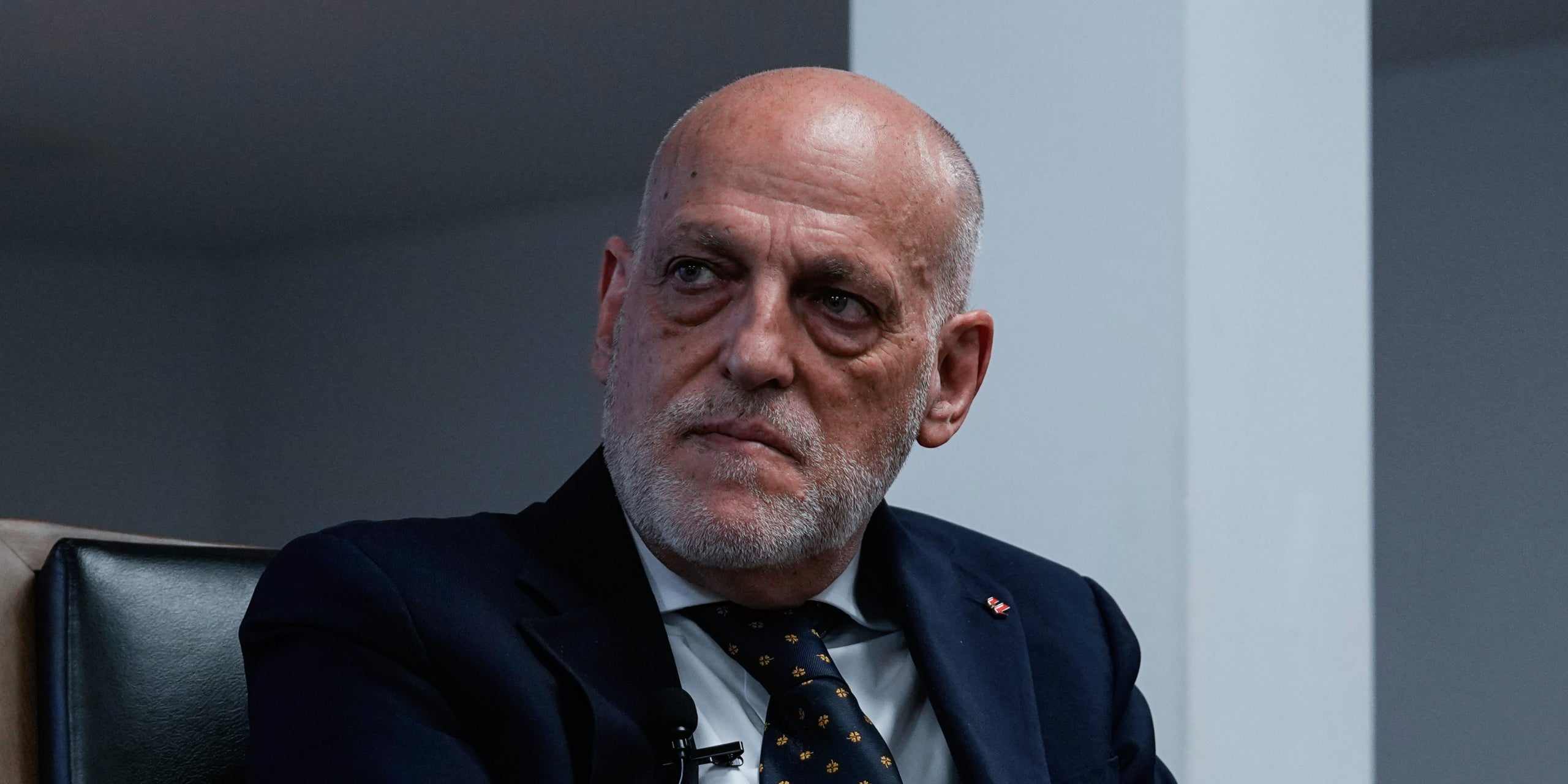
La Liga president Javier Tebas has publicly called for the resignation of FIFA president Gianni Infantino, accusing FIFA’s leadership of significantly harming the football industry through the expansion of international tournaments at the expense of national leagues and clubs.
In his conversation with Italian publication La Gazzetta dello Sport, Tebas responded “In my opinion, yes, I think his time is up,” when asked whether Infantino should quit. He described the system within FIFA as fundamentally flawed, indicating that although there is widespread behind-the-scenes criticism of Infantino’s approach, no alternative presidential candidates are forthcoming as “no one wants to run to lose.”
🗣️🚨 𝗡𝗘𝗪: Javier Tebas (La Liga president): "We've repeatedly expressed our concerns about the calendar, and now they want to expand the World Cup to 64 teams."
"I believe Infantino's time is over. But he has the backing of the system and the federations, so there's not much… pic.twitter.com/PdSteY8zL5
— The Touchline | 𝐓 (@TouchlineX) July 21, 2026
Fixture Congestion and World Cup Expansion Criticised
Tebas has repeatedly opposed FIFA’s recent initiatives, including the plans to further enlarge the World Cup. The current president, Gianni Infantino, announced in April his intention to seek a fourth term, citing strong backing among national federations despite internal industry dissatisfaction. The forthcoming FIFA presidential election, determining leadership for the 2027-2031 cycle, is due to take place in Morocco on March 18 next year.
CONMEBOL president Alejandro Dominguez recently renewed proposals to expand the men’s World Cup to 64 teams, possibly starting with the centenary 2030 edition, a move Infantino has indicated could be considered in the future. Tebas, however, has warned that a further increase in participating nations would severely impact domestic competitions and damage the broader football ecosystem. He stated, “Increasing the number of national teams makes no sense,” and argued that the domestic leagues are at the heart of football’s economic stability, while the World Cup, despite being the showpiece, should not dictate the calendar or priorities.
Allegations of Favouritism and Governance Issues
Tebas also raised serious concerns regarding FIFA’s handling of disciplinary matters, specifically criticising the organisation’s decision to postpone a one-match suspension for United States striker Folarin Balogun after a red card in the World Cup. According to Tebas, the intervention of U.S. President Donald Trump played a pivotal role in overturning Balogun’s ban. He argued that, had the United States not been eliminated by Belgium, a major scandal could have endangered Infantino’s position.
Besides fixture and disciplinary controversies, rising tensions at the governance level were further highlighted by UEFA president Aleksander Ceferin’s decision to miss Sunday’s World Cup final. According to a Reuters source, this absence followed ongoing disputes between UEFA and FIFA over match operations, disciplinary procedures, and refereeing arrangements.
2026 FIFA World Cup: Format and Results
The 2026 World Cup took place from June 11th to July 19th across the United States, Canada, and Mexico, marking the first edition with 48 competing national teams. Spain claimed the championship by defeating Argentina in the final.
Broader Implications for the Game
Tebas has emphasised that the current focus on enlarging international tournaments is risking the viability of leagues that provide jobs and sustain the sport throughout the year. “They’re destroying the football industry, the one that generates tens of thousands of jobs for an event that lasts 40 days and only a minority of players attends,” he warned.
His remarks represent a deepening rift within football’s global governance as domestic leagues and continental bodies continue to push back against FIFA’s evolving vision for the international game.