Key Takeaways:
- Gianni Infantino announced that discussions on expanding the World Cup to 64 teams will occur after this year’s tournament
- The 2026 World Cup, currently underway in Canada, Mexico, and the United States, features a record 48 national teams for the first time
- Infantino expects FIFA’s 39-day tournament to generate 13 to 14 billion Swiss francs (€14.1 billion to €15.18 billion) in revenue
Future Expansion Under Consideration
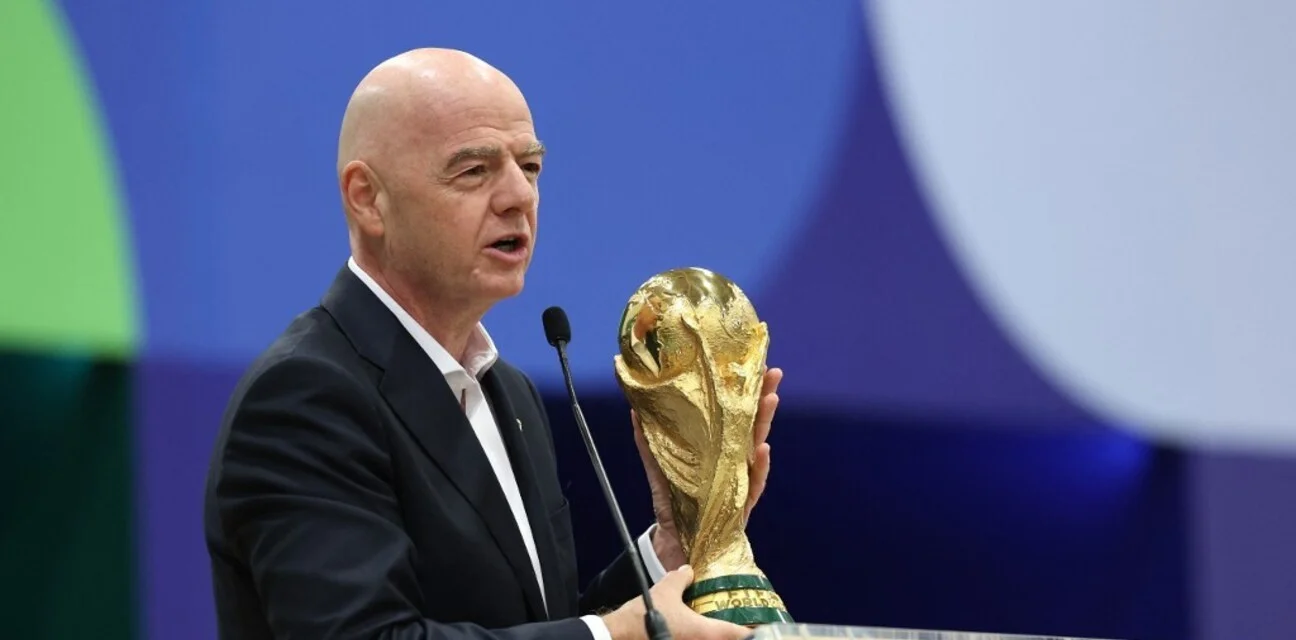
FIFA president Gianni Infantino has signalled that increasing the number of teams at the FIFA World Cup finals to 64 will be discussed once the current edition concludes. While this year’s tournament marks the debut of the expanded 48-team format, Infantino gave no further details regarding how a future enlargement to 64 sides might be structured.
Infantino, who was instrumental in pushing the finals from 32 to 48 participating nations, made these remarks to Swiss television broadcaster Blue Sport. He commented: “These are all issues that we will be examining after the World Cup.”
🚨🚨| BREAKING: FIFA President Gianni Infantino revealed that the organization is considering expanding the 2030 World Cup to a 64-team format, adding 16 more countries.
The 2030 tournament is already set to span three continents and six countries; Uruguay, Argentina, and… pic.twitter.com/LNVB3sZkXH
— Goals Side (@goalsside) July 12, 2026
Embracing Global Participation
Infantino emphasised the importance of a truly global tournament, stating that all nations should be given the opportunity to dream of World Cup participation. He highlighted the increasing quality across teams from every continent, underlining that denying smaller countries the chance to compete could undermine their motivation to develop football further.
Reflecting on the success of including 48 teams, the FIFA president said that every side competed at a high level, with teams from all continents finding the net and securing points. Of particular note, Infantino observed: “Nine out of 10 African teams reached the knockout stage. At the last World Cup, there were only five teams from Africa. That just goes to show how important it is to include all teams, to give them this opportunity to participate.” He reiterated his commitment to maintaining an inclusive approach to the competition’s format.
The field for the World Cup was last expanded to 32 teams in 1998. The subsequent finals in 2030 are set to be jointly hosted by Morocco, Portugal, and Spain, with Saudi Arabia due to stage the 2034 tournament.
Controversy Over Hydration Breaks and Ticket Pricing
Infantino, known for his limited appearances in the media, addressed concerns regarding the introduction of hydration breaks during matches. These breaks, sometimes perceived as a means to enable additional advertising opportunities, have drawn criticism. He pointed out that cooling breaks were deployed during around 60% of matches at last year’s Club World Cup in the USA, but only implemented when temperatures were deemed high enough, leading to debates about consistency for all teams.
On the subject of ticket prices, Infantino defended FIFA’s policy, highlighting near-capacity attendance at venues. “Experts determined the ticket prices before the tournament. Our experts worked on that and told us: ‘These are the prices you can go with’. We see the proof now: prices that some people claimed were too high are being resold on the secondary market — which is perfectly legal here — for four or five times the original cost.” He noted that stadiums have achieved a utilisation rate of 99.7%, projecting an increase to 99.9% by the end of the tournament.
Record Revenues Anticipated for FIFA
FIFA expects to generate between 13 billion and 14 billion Swiss francs (€14.1 billion to €15.18 billion) from the current 39-day World Cup, which Infantino described as “quite satisfactory”.