Key Takeaways:
- Enzo Maresca said Manchester City’s post-Pep Guardiola transition will take time, drawing comparisons with Arsenal and Manchester United after Arsene Wenger and Sir Alex Ferguson
- The City manager identified defensive mistakes as his side’s biggest problem and explained the thinking behind his tactical choices against Napoli
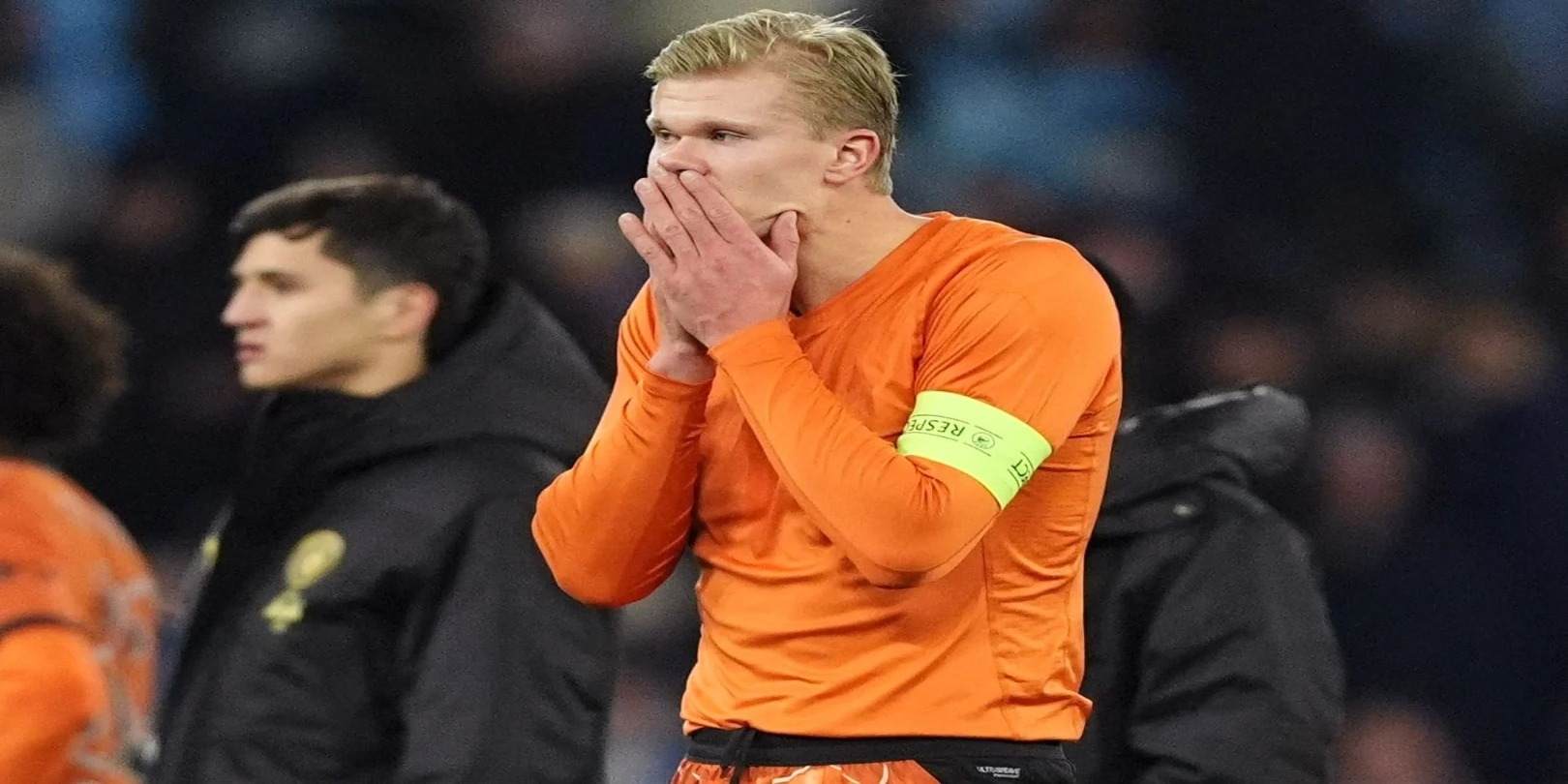
- Erling Haaland admitted City are beginning to question themselves during their winless run and called for a “top, top performance” against Arsenal
Enzo Maresca and Erling Haaland offered two revealing assessments of Manchester City’s current problems after Tuesday’s 2-2 Champions League draw with Napoli, with both acknowledging that the team are struggling to produce the control and consistency expected of them.
Maresca framed the difficulties as part of a wider transition following Pep Guardiola’s decade in charge, while Haaland was more direct about the uncertainty within the team, admitting that a run without victories has left City searching for answers.
Maresca Says City’s Transition Will Take Time
Maresca urged patience when discussing City’s adjustment to life after Guardiola, pointing to the difficulties Arsenal and Manchester United experienced after the departures of Arsene Wenger and Sir Alex Ferguson.
🚨🗣️ 𝗡𝗘𝗪: Enzo Maresca asks for PATIENCE:
"We need TIME… This season, it’s a different manager, different players."
"We changed 50% of the squad, It’s a transition." https://t.co/O2MUBOidOf
— The Touchline | 𝐓 (@TouchlineX) November 24, 2026
“It’s certainly not easy, because after 10 years with the same coach, it’s tough for us, it was tough for Arsenal after Arsene Wenger, it is tough for Manchester United who are still trying to find their way after Sir Alex Ferguson. I was told today that Arsenal won the Premier League after seven or eight years following Wenger, so it takes a little time,” Maresca explained.
Defensive Problems Are Maresca’s Main Concern
While Maresca was relatively encouraged by other aspects of City’s performance, he was far less satisfied with the defensive mistakes that once again left his side vulnerable.
“I think our defensive issues are pretty obvious and we need to resolve those. As for the rest, I feel relatively calm, because it is fairly difficult to break down a low defensive block like the one Napoli used. The main problem is that we are conceding too many goals, and we need to do something about that,” the manager confessed.
City recovered twice against Napoli, but Maresca’s concern was not simply the number of goals conceded. His comments pointed to a recurring problem in matches where City have struggled to maintain control despite enjoying long periods on the ball.
Maresca Explains His Tactical Choices
The City manager also addressed several of his selection and tactical decisions, including the use of Rayan Cherki in wider areas and the decision to leave Jeremy Doku and Iliman Ndiaye on the bench for the opening hour.
Maresca said his staff expected Napoli to defend with either a 3-5-2 or 3-5-1-1 shape, making central areas difficult to penetrate and encouraging City to search for space on the flanks.
“I tried to think we could send Cherki out wide, and indeed he did find a lot of space there and we got the ball to him a lot in the first half, but we didn’t manage to create enough chances out of it. In the last half-hour, the game changed a bit, but this was the thought behind the choices.”
Ayyoub Bouaddi’s role at the base of midfield formed another part of Maresca’s search for a more stable structure, with Elliott Anderson given greater freedom further forward.
“I am seeking the right balance between attacking and defending. I am trying to keep things simple, as I did at the two clubs I worked with previously. We are looking for the right balance between those two phases,” he admitted.
Haaland Admits City Are Starting to Question Themselves
Haaland’s post-match reaction was more blunt. The striker admitted City had failed to impose themselves in the manner they wanted and suggested the lack of victories was beginning to affect the team’s confidence and decision-making.
“We tried to push but we couldn’t. It’s not good enough,” he said. “We let them in too easily and were unable to control or attack the game as we want.
“Football can be so difficult and easy. When you win games, everything is easy, and you know exactly what to do, when you don’t win you start to question everything. The perfect thing would be to don’t think, but it’s difficult in these moments.”
Speaking separately to beIN Sports, Haaland returned to City’s inability to control matches and admitted he could not identify one simple explanation for what has gone wrong.
“We managed to come back two times but we demand more, we have to do better, we have to find some ways to make us control the game more and perform in a better way,” he added. “I have no idea what we were missing, but you could feel it in the last few games that there’s something that’s not clicking fully and we have to find out and we have to stay positive and we have to get the best out of every single player.”
Haaland Calls for a Response Ahead of Arsenal
The Norwegian’s own form has dipped alongside City’s results, with Haaland now without a goal in four consecutive appearances after scoring 14 times in his opening 12 matches of the season.
He nevertheless stressed that City’s response has to come from within the squad rather than from dwelling on what has gone wrong.
“We have so much quality. It’s about getting that quality out of every single player. We have to regroup to stay positive and bring the energy on the pitch.”
That response will be tested immediately against Arsenal, with City travelling to face the reigning Premier League champions while searching for their first win in five matches.
Haaland underlined the scale of the challenge ahead, saying: “We go to the champions next. The most difficult game of the season. We need a top, top performance.”